Datasets and catalogs
This page lists the last version for each dataset in Gaia Sky. You can download each dataset directly from within Gaia Sky using the dataset manager (recommended!), or by following the ‘Dataset files’ link in each dataset.
In order to install any of the packages manually, just download it and extract the contents it in your data folder (defaults to $HOME/.local/share/gaiasky/data/ in Linux, and $HOME/.gaiasky/data in Windows and macOS).
Click on the dataset title to reveal more information.
Data packs
Base data pack 🔗
Open in Gaia Sky
default-data
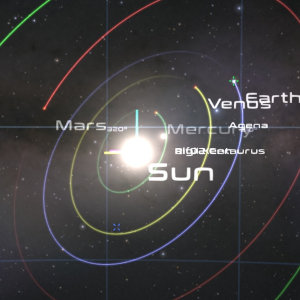
default-dataRequired data pack.
Contains the solar system planets and moons, minor planets, satellites, orbits, constellations, the Milky Way, grids, locations and other important objects. Without this data pack Gaia Sky won't start.
- Type:
data-pack - Dataset version: v65
- Minimum Gaia Sky version: 3.8.1
- Size: 104.7MiB (109794598)
- Number of objects: 9.93k (9933)
- Creator: Toni Sagristà, tsagrista@ari.uni-heidelberg.de
- Credits:
- Gaia Sky development team
- ESA/Gaia/DPAC
- ESA/Planck/C. North
- Visible Earth, Reto Stöckli, NASA Earth Observatory
- U.S. Geological Service
- Stefan Payne-Wardenaar
- Solar System Scope, www.solarsystemscope.com
- Tom Patterson, www.shadedrelief.com
- Phil Stooke, Grant Hutchison
- Sources/links:
- Files:
Texture packs
High resolution textures 🔗
Open in Gaia Sky
hi-res-textures

hi-res-texturesHigh resolution texture pack including some 4K and 8K textures and cubemaps for planet surfaces and asteroids.
- Type:
texture-pack - Dataset version: v15
- Minimum Gaia Sky version: 3.7.1-2
- Size: 259.6MiB (272190911)
- Number of objects: 76 (76)
- Creator: Toni Sagristà, tsagrsita@ari.uni-heidelberg.de
- Sources/links:
- Files:
Gaia star catalogs
DR3 Cepheid and RR Lyrae 🔗
Open in Gaia Sky
catalog-variablestars-dr3
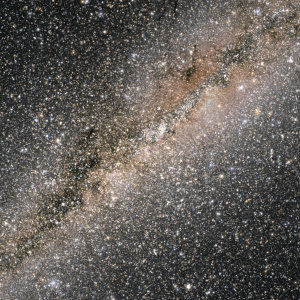
catalog-variablestars-dr3Cepheid and RR Lyrae stars in Gaia DR3, brightened up by 5 magnitudes.
- Type:
catalog-gaia - Dataset version: v1
- Minimum Gaia Sky version: 3.3.1
- Size: 353.0MiB (370118101)
- Number of objects: 186.93k (186928)
- Creator: Toni Sagristà, tsagrsita@ari.uni-heidelberg.de
- Replaces:
- Sources/links:
- Files:
eDR3 White Dwarfs 🔗
Open in Gaia Sky
catalog-whitedwarfs-edr3
White dwarfs catalog based on Gaia eDR3 data, by Gentile Fusillo et al. 2021, MNRAS. Contains 359073 high-confidence white dwarf candidates (Pwd>0.75).
- Type:
catalog-gaia - Dataset version: v1
- Minimum Gaia Sky version: 3.3.1
- Size: 31.2MiB (32715467)
- Number of objects: 359.07k (359073)
- Creator: Toni Sagristà, tsagrsita@ari.uni-heidelberg.de
- Replaces:
- Sources/links:
- Files:
Gaia Catalog of Nearby Stars 🔗
Open in Gaia Sky
catalog-gcns
The Gaia Catalog of Nearby Stars (R.L. Smart et. al., 2020) is a clean and well-characterised catalogue of objects within 100 pc of the Sun from the Gaia Early Data Release 3. The catalogue is estimated to contain at least 92% of stars of stellar type M9 within 100 pc of the Sun.
- Type:
catalog-gaia - Dataset version: v3
- Minimum Gaia Sky version: 3.3.1
- Size: 588.4MiB (616995788)
- Number of objects: 331.08k (331078)
- Creator: Toni Sagristà, tsagrsita@ari.uni-heidelberg.de
- Sources/links:
- Files:
Gaia DR3 best 🔗
Open in Gaia Sky
gaia-dr3-best
Star catalog based on Gaia DR3 with only the very best stars in terms of parallax relative error. Contains all stars with up to 0.4%/0.002% bright/faint parallax relative error, and all Hipparcos stars.
- Type:
catalog-gaia - Dataset version: v1
- Minimum Gaia Sky version: 3.6.1
- Size: 51.9MiB (54472471)
- Number of objects: 646.4k (646400)
- Creator: Toni Sagristà, tsagrsita@ari.uni-heidelberg.de
- Sources/links:
- Files:
Gaia DR3 tiny 🔗
Open in Gaia Sky
gaia-dr3-tiny
Star catalog based on Gaia DR3 with a tiny number of stars. Contains all stars with up to 1%/0.01% bright/faint parallax relative error, and all Hipparcos stars.
- Type:
catalog-gaia - Dataset version: v3
- Minimum Gaia Sky version: 3.6.1
- Size: 197.4MiB (206947413)
- Number of objects: 2.55M (2552302)
- Creator: Toni Sagristà, tsagrsita@ari.uni-heidelberg.de
- Sources/links:
- Files:
Gaia DR3 weeny 🔗
Open in Gaia Sky
gaia-dr3-weeny
Star catalog based on Gaia DR3 with only the very best stars in terms of parallax relative error. Contains all stars with up to 0.8%/0.01% bright/faint parallax relative error, and all Hipparcos stars.
- Type:
catalog-gaia - Dataset version: v3
- Minimum Gaia Sky version: 3.6.1
- Size: 150.6MiB (157904615)
- Number of objects: 1.94M (1939279)
- Creator: Toni Sagristà, tsagrsita@ari.uni-heidelberg.de
- Sources/links:
- Files:
GD-1 stellar stream 🔗
Open in Gaia Sky
catalog-gd1
GD-1 stream, one of the longest and coldest stellar streams in the Milky Way, with brighter magnitudes for visibility.
- Type:
catalog-gaia - Dataset version: v2
- Minimum Gaia Sky version: 3.3.1
- Size: 360.0KiB (368633)
- Number of objects: 1.36k (1365)
- Creator: Toni Sagristà, tsagrsita@ari.uni-heidelberg.de
- Sources/links:
- Files:
DR2 White Dwarfs ⚠️ 🔗
Open in Gaia Sky
catalog-whitedwarfs-dr2
White dwarfs catalog (+ 10 mag) based on Gaia DR2 data, by Gentile Fusillo et al. 2018, MNRAS 482, 4579. 256082 white dwarfs.
- Type:
catalog-gaia - Dataset version: v3
- Minimum Gaia Sky version: 3.3.1
- Size: 120.7MiB (126516020)
- Number of objects: 256.08k (256082)
- Creator: Toni Sagristà, tsagrsita@ari.uni-heidelberg.de
- Replaced by:
- Sources/links:
- Files:
Gaia DR2 Cepheid and RR Lyrae ⚠️ 🔗
Open in Gaia Sky
catalog-variablestars-dr2
Cepheids and RR Lyrae stars in Gaia DR2, brightened up by 5 magnitudes.
- Type:
catalog-gaia - Dataset version: v3
- Minimum Gaia Sky version: 3.3.1
- Size: 143.1MiB (150038565)
- Number of objects: 106.34k (106339)
- Creator: Toni Sagristà, tsagrsita@ari.uni-heidelberg.de
- Replaced by:
- Sources/links:
- Files:
Level-of-detail catalogs
Gaia DR3 bayesian distances 🔗
Open in Gaia Sky
gaia-dr3-geodist
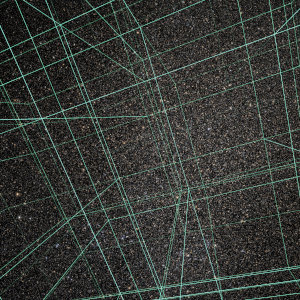
gaia-dr3-geodistStar catalog based on Gaia DR3. Contains all stars with bayesian distances as determined by Bailer-Jones et. al.
- Type:
catalog-lod - Dataset version: v2
- Minimum Gaia Sky version: 3.3.1
- Size: 109.3GiB (117384320464)
- Number of objects: 1.47B (1465231014)
- Creator: Toni Sagristà, tsagrsita@ari.uni-heidelberg.de
- Sources/links:
- Files:
Gaia DR3 bright 🔗
Open in Gaia Sky
gaia-dr3-bright
Star catalog based on Gaia DR3 with the brightest stars in the catalog. Contains all stars with up to 90%/1% bright/faint parallax relative error.
- Type:
catalog-lod - Dataset version: v2
- Minimum Gaia Sky version: 3.3.1
- Size: 863.0MiB (904931436)
- Number of objects: 11.27M (11269665)
- Creator: Toni Sagristà, tsagrsita@ari.uni-heidelberg.de
- Sources/links:
- Files:
Gaia DR3 default 🔗
Open in Gaia Sky
gaia-dr3-default
Star catalog based on Gaia DR3, with a good balance between good distances and number of stars. Contains all stars with up to 20%/1.5% bright/faint parallax relative error, and all Hipparcos stars.
- Type:
catalog-lod - Dataset version: v3
- Minimum Gaia Sky version: 3.6.1
- Size: 1.1GiB (1213474126)
- Number of objects: 15.13M (15127025)
- Creator: Toni Sagristà, tsagrsita@ari.uni-heidelberg.de
- Sources/links:
- Files:
Gaia DR3 extra large 🔗
Open in Gaia Sky
gaia-dr3-extralarge
Star catalog based on Gaia DR3 with an extremely large number of stars. Contains all stars with up to 95% parallax relative error.
- Type:
catalog-lod - Dataset version: v2
- Minimum Gaia Sky version: 3.3.1
- Size: 52.8GiB (56672114111)
- Number of objects: 707.16M (707157643)
- Creator: Toni Sagristà, tsagrsita@ari.uni-heidelberg.de
- Sources/links:
- Files:
Gaia DR3 fidelity 🔗
Open in Gaia Sky
gaia-dr3-fidelity
Star catalog based on Gaia DR3. Contains all stars for which the fidelity value is > 0.5.
- Type:
catalog-lod - Dataset version: v2
- Minimum Gaia Sky version: 3.3.1
- Size: 29.4GiB (31516391181)
- Number of objects: 393.68M (393678770)
- Creator: Toni Sagristà, tsagrsita@ari.uni-heidelberg.de
- Sources/links:
- Files:
Gaia DR3 large 🔗
Open in Gaia Sky
gaia-dr3-large
Star catalog based on Gaia DR3 with a large number of stars. Contains all stars with up to 50%/12.5% bright/faint parallax relative error.
- Type:
catalog-lod - Dataset version: v2
- Minimum Gaia Sky version: 3.3.1
- Size: 9.1GiB (9788956560)
- Number of objects: 122.18M (122183859)
- Creator: Toni Sagristà, tsagrsita@ari.uni-heidelberg.de
- Sources/links:
- Files:
Gaia DR3 medium 🔗
Open in Gaia Sky
gaia-dr3-medium
Star catalog based on Gaia DR3 with a moderate number of stars. Contains all stars with up to 30%/5% bright/faint parallax relative error.
- Type:
catalog-lod - Dataset version: v2
- Minimum Gaia Sky version: 3.3.1
- Size: 3.7GiB (4001198931)
- Number of objects: 49.94M (49939229)
- Creator: Toni Sagristà, tsagrsita@ari.uni-heidelberg.de
- Sources/links:
- Files:
Gaia DR3 photometric distances 🔗
Open in Gaia Sky
gaia-dr3-photdist
Star catalog based on Gaia DR3. Contains all stars with photometric distances from GSP-Phot Aeneas best library using BP/RP spectra.
- Type:
catalog-lod - Dataset version: v2
- Minimum Gaia Sky version: 3.3.1
- Size: 35.2GiB (37749371374)
- Number of objects: 470.81M (470805079)
- Creator: Toni Sagristà, tsagrsita@ari.uni-heidelberg.de
- Sources/links:
- Files:
Gaia DR3 RUWE 🔗
Open in Gaia Sky
gaia-dr3-ruwe
Star catalog based on Gaia DR3. Contains the stars for which the RUWE (re-normalized unit weight error) is <= 1.4.
- Type:
catalog-lod - Dataset version: v2
- Minimum Gaia Sky version: 3.3.1
- Size: 71.5GiB (76826010256)
- Number of objects: 957.75M (957749159)
- Creator: Toni Sagristà, tsagrsita@ari.uni-heidelberg.de
- Sources/links:
- Files:
Gaia DR3 small 🔗
Open in Gaia Sky
gaia-dr3-small
Star catalog based on Gaia DR3 with a small number of stars. Contains all stars with up to 10%/0.5% bright/faint parallax relative error.
- Type:
catalog-lod - Dataset version: v2
- Minimum Gaia Sky version: 3.3.1
- Size: 628.6MiB (659181456)
- Number of objects: 8.2M (8199560)
- Creator: Toni Sagristà, tsagrsita@ari.uni-heidelberg.de
- Sources/links:
- Files:
Gaia DR3 very large 🔗
Open in Gaia Sky
gaia-dr3-verylarge
Star catalog based on Gaia DR3 with a very large number of stars. Contains all stars with up to 50% parallax relative error.
- Type:
catalog-lod - Dataset version: v2
- Minimum Gaia Sky version: 3.3.1
- Size: 34.8GiB (37361487707)
- Number of objects: 466.14M (466144211)
- Creator: Toni Sagristà, tsagrsita@ari.uni-heidelberg.de
- Sources/links:
- Files:
Star catalogs
ATNF Pulsar Catalogue 🔗
Open in Gaia Sky
catalog-atnf-pulsars
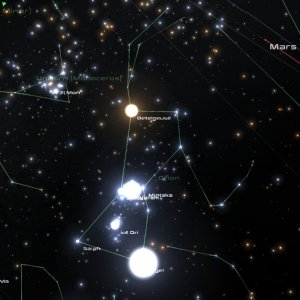
catalog-atnf-pulsars285 pulsars from the Australia Telescope National Facility. The ATNF Pulsar Catalog is a comprehensive database of known pulsars compiled by G. Hobbs, R.N. Manchester et al., which includes data from various radio surveys, notably the Parkes Multibeam Pulsar Survey. It serves as a key resource for astronomers studying pulsars and their properties.
- Type:
catalog-star - Dataset version: v1
- Minimum Gaia Sky version: 3.7.5
- Size: 230.3KiB (235873)
- Number of objects: 285 (285)
- Creator: Robero Zacco
- Credits:
- Australia Telescope National Facility
- CSIRO
- Sources/links:
- Files:
Fifth Catalog of Nearby Stars (CNS5) 🔗
Open in Gaia Sky
catalog-cns5
The Fifth Catalogue of Nearby Stars (CNS5) aims to provide the most volume-complete sample of stars in the solar neighbourhood. The CNS5 is compiled based on trigonometric parallaxes from Gaia EDR3 and Hipparcos, and supplemented with astrometric data from Spitzer and ground-based surveys carried out in the infrared. The CNS5 catalogue is statistically complete down to 19.7 mag in G-band and 11.8 mag in W1-band absolute magnitudes, corresponding to a spectral type of L8. Continuous updates of observational data for nearby stars from all sources were collected and evaluated. For all known stars in the 25 pc sphere around the Sun, the best values of positions in space, velocities, and magnitudes in different filters are presented.
- Type:
catalog-star - Dataset version: v2
- Minimum Gaia Sky version: 3.3.1
- Size: 3.0MiB (3107992)
- Number of objects: 5.93k (5931)
- Creator: Toni Sagristà, tsagrsita@ari.uni-heidelberg.de
- Sources/links:
- Files:
Hipparcos (new reduction) 🔗
Open in Gaia Sky
catalog-hipparcos
Hipparcos new reduction (van Leeuwen, 2007) with curated star names.
- Type:
catalog-star - Dataset version: v6
- Minimum Gaia Sky version: 3.6.8
- Size: 11.2MiB (11738224)
- Number of objects: 177.96k (177955)
- Creator: Toni Sagristà, tsagrsita@ari.uni-heidelberg.de
- Sources/links:
- Files:
Galaxy catalogs
NEARGALCAT 🔗
Open in Gaia Sky
catalog-nbg
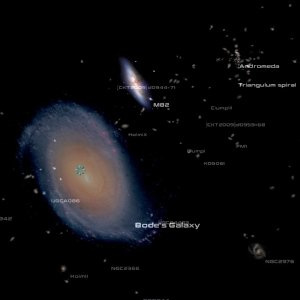
catalog-nbgUpdated Nearby Galaxy Catalog. This table contains an all-sky catalog of 869 nearby galaxies having individual distance estimates within 11 Mpc or corrected radial velocities relative to the Local Group centroid VLG < 600 km s-1. The catalog is a renewed and expanded version of the previous Catalog of Neighboring Galaxies by Karachentsev et al. (2004, AJ, 127, 2031). It collects data on the following galaxy observables: angular diameters, apparent magnitudes in the far-UV, B, and Ks bands, H-alpha and H I fluxes, morphological types, H I-line widths, radial velocities, and distance estimates. In this Local Volume (LV) sample, 108 dwarf galaxies still remain without measured radial velocities. The catalog also lists calculated global galaxy parameters: the linear Holmberg diameters, absolute B magnitudes, surface brightnesses, H I masses, stellar masses estimated via K-band luminosity, H I rotational velocities corrected for galaxy inclination, indicative masses within the Holmberg radius, and three kinds of 'tidal index' which quantify the local density environment. In the reference paper, the authors briefly discuss the Hubble flow within the LV and different scaling relations that characterize galaxy structure and global star formation in them. They also trace the behavior of the mean stellar mass density, H I-mass density, and star formation rate density within the volume considered.
- Type:
catalog-gal - Dataset version: v17
- Minimum Gaia Sky version: 3.7.2
- Size: 4.9MiB (5143697)
- Number of objects: 875 (875)
- Creator: Toni Sagristà, tsagrsita@ari.uni-heidelberg.de
- Sources/links:
- Files:
SDSS DR12 🔗
Open in Gaia Sky
catalog-sdss-12
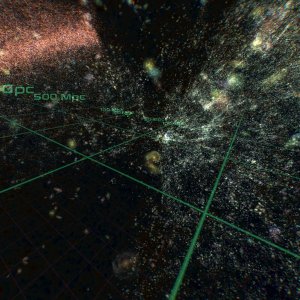
Part of Sloan Digital Sky Survey DR12, a catalog of distant, high-redshift galaxies and objects.
- Type:
catalog-gal - Dataset version: v8
- Minimum Gaia Sky version: 3.5.8
- Size: 13.8MiB (14492179)
- Number of objects: 327.83k (327835)
- Creator: Toni Sagristà, tsagrsita@ari.uni-heidelberg.de
- Sources/links:
- Files:
SDSS DR14 🔗
Open in Gaia Sky
catalog-sdss-14
Part of Sloan Digital Sky Survey DR14, a catalog of distant, high-redshift galaxies and objects.
- Type:
catalog-gal - Dataset version: v8
- Minimum Gaia Sky version: 3.5.8
- Size: 106.9MiB (112139328)
- Number of objects: 3.04M (3040257)
- Creator: Toni Sagristà, tsagrsita@ari.uni-heidelberg.de
- Sources/links:
- Files:
SDSS DR17 🔗
Open in Gaia Sky
catalog-sdss-17
High-redshift galaxies in the Sloan Digital Sky Survey DR17 with comoving distances.
- Type:
catalog-gal - Dataset version: v5
- Minimum Gaia Sky version: 3.5.8
- Size: 96.6MiB (101246729)
- Number of objects: 2.81M (2812409)
- Creator: Toni Sagristà, tsagrsita@ari.uni-heidelberg.de
- Sources/links:
- Files:
SDSS DR18 🔗
Open in Gaia Sky
catalog-sdss-18
High-redshift galaxies in the Sloan Digital Sky Survey DR18 with comoving distances.
- Type:
catalog-gal - Dataset version: v2
- Minimum Gaia Sky version: 3.5.8
- Size: 124.9MiB (130962565)
- Number of objects: 3.64M (3637836)
- Creator: Toni Sagristà, tsagrsita@ari.uni-heidelberg.de
- Sources/links:
- Files:
Cluster catalogs
DR3 Open Clusters Hunt-Reffert 2023 🔗
Open in Gaia Sky
catalog-clusters-hunt-reffert-2023
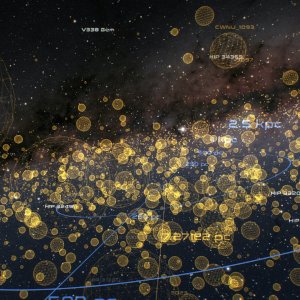
catalog-clusters-hunt-reffert-2023Open cluster catalog produced by Emily Hunt and Sabine Reffert. It contains 2700 open clusters based on Gaia DR3 data. A blind, all-sky search for open clusters using 729 million sources from Gaia DR3 down to magnitude G∼20 was conducted, creating a homogeneous catalogue of clusters including many new objects. For more info refer to the link.
- Type:
catalog-cluster - Dataset version: v2
- Minimum Gaia Sky version: 3.5.0
- Size: 1.4MiB (1520425)
- Number of objects: 7.17k (7167)
- Creator: Toni Sagristà, tsagrsita@ari.uni-heidelberg.de
- Sources/links:
- Files:
MWSC (Karachenko et. al. 2013) 🔗
Open in Gaia Sky
catalog-mwsc
Milky Way Star Clusters catalog. Milky Way global survey of star clusters. II. (Kharchenko et. al., 2013).
- Type:
catalog-cluster - Dataset version: v7
- Minimum Gaia Sky version: 3.5.0
- Size: 380.1KiB (389172)
- Number of objects: 3.01k (3006)
- Creator: Toni Sagristà, tsagrsita@ari.uni-heidelberg.de
- Sources/links:
- Files:
Open Clusters DR2 Catalog 🔗
Open in Gaia Sky
catalog-ocdr2
Open Clusters catalog based on Gaia DR2 data, by A. Castro-Ginard et al.
- Type:
catalog-cluster - Dataset version: v7
- Minimum Gaia Sky version: 3.5.0
- Size: 349.2KiB (357605)
- Number of objects: 2.02k (2017)
- Creator: Toni Sagristà, tsagrsita@ari.uni-heidelberg.de
- Sources/links:
- Files:
Other catalogs
Gargantua black hole 🔗
Open in Gaia Sky
gargantua-blackhole
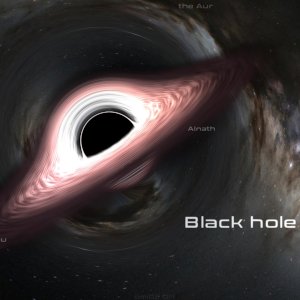
gargantua-blackholeThe black hole from Interstellar, somewhere in the galaxy...
- Type:
catalog-other - Dataset version: v5
- Minimum Gaia Sky version: 3.6.5
- Size: 3.1KiB (3125)
- Number of objects: 1 (1)
- Creator: Toni Sagristà, tsagrsita@ari.uni-heidelberg.de
- Sources/links:
- Files:
NGC2000 Nebulae 🔗
Open in Gaia Sky
catalog-nebulae
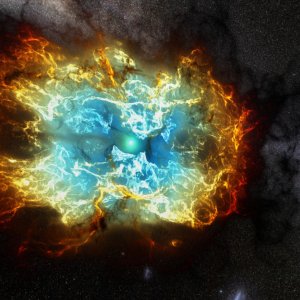
Catalog of bright emisison or reflection nebulae, planetary nebulae and clusters associated with nebulosity in the NGC2000 catalog. This catalog contains 47 of the most well-known nebulae in the Milky Way. Some of the nebulae are represented as volumes, and some are represented as 3D decals.
- Type:
catalog-other - Dataset version: v12
- Minimum Gaia Sky version: 3.7.2
- Size: 5.5MiB (5812242)
- Number of objects: 47 (47)
- Creator: Toni Sagristà, tsagrsita@ari.uni-heidelberg.de
- Sources/links:
- Files:
Oort cloud 🔗
Open in Gaia Sky
oort-cloud

Simulated Oort cloud data with 10000 ice particles.
- Type:
catalog-other - Dataset version: v4
- Minimum Gaia Sky version: 3.7.2
- Size: 705.3KiB (722247)
- Number of objects: 10k (10000)
- Creator: Toni Sagristà, tsagrista@ari.uni-heidelberg.de
- Sources/links:
- Files:
Asteroids and SSO
Asteroids and SSO (Gaia FPR) 🔗
Open in Gaia Sky
catalog-asteroids-fpr
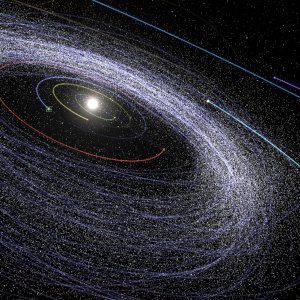
catalog-asteroids-fprMore than 150k asteroids and other SSO, based on Gaia FPR (Focused Product Release) data. This dataset contains the astrometry of asteroids collected by Gaia over 66 months.
- Type:
catalog-sso - Dataset version: v4
- Minimum Gaia Sky version: 3.7.2
- Size: 21.3MiB (22338745)
- Number of objects: 156.76k (156762)
- Creator: Toni Sagristà, tsagrista@ari.uni-heidelberg.de
- Replaces:
- Sources/links:
- Files:
Asteroids and SSO (Gaia DR2) ⚠️ 🔗
Open in Gaia Sky
catalog-asteroids-dr2
Some 14k asteroids and other SSO, based on Gaia DR2 data.
- Type:
catalog-sso - Dataset version: v2
- Minimum Gaia Sky version: 3.3.1
- Size: 7.0MiB (7311360)
- Number of objects: 14.1k (14104)
- Creator: Toni Sagristà, tsagrsita@ari.uni-heidelberg.de
- Replaced by:
- Files:
Asteroids and SSO (Gaia DR3) ⚠️ 🔗
Open in Gaia Sky
catalog-asteroids-dr3
More than 150k asteroids and other SSO, based on Gaia DR3 data.
- Type:
catalog-sso - Dataset version: v2
- Minimum Gaia Sky version: 3.3.1
- Size: 77.9MiB (81663547)
- Number of objects: 154.79k (154787)
- Creator: Toni Sagristà, tsagrsita@ari.uni-heidelberg.de
- Replaces:
- Replaced by:
- Files:
NEA asteroids (Gaia DR3, coloured) ⚠️ 🔗
Open in Gaia Sky
catalog-asteroids-dr3-nea
Some 390 near Earth asteroids found in the Gaia DR3 catalog.
- Type:
catalog-sso - Dataset version: v1
- Minimum Gaia Sky version: 3.3.1
- Size: 315.8KiB (323354)
- Number of objects: 394 (394)
- Creator: Toni Sagristà, tsagrsita@ari.uni-heidelberg.de
- Replaced by:
- Files:
Trojan asteroids (Gaia DR3, coloured) ⚠️ 🔗
Open in Gaia Sky
catalog-asteroids-dr3-trojan
The Jupiter Trojan asteroids in the Gaia DR3 catalog.
- Type:
catalog-sso - Dataset version: v1
- Minimum Gaia Sky version: 3.3.1
- Size: 1.5MiB (1540159)
- Number of objects: 1.54k (1545)
- Creator: Toni Sagristà, tsagrsita@ari.uni-heidelberg.de
- Replaced by:
- Files:
Exoplanets and extrasolar systems
Exonia extrasolar system 🔗
Open in Gaia Sky
system-exonia

system-exoniaA made-up, partially procedurally generated extra-solar system with two stars, four planets and a moon.
- Type:
system - Dataset version: v4
- Minimum Gaia Sky version: 3.7.1
- Size: 2.5MiB (2663993)
- Number of objects: 7 (7)
- Creator: N/A
- Sources/links:
- Files:
Gaia DR3 black holes 🔗
Open in Gaia Sky
system-gaia-bhs
This dataset contains the systems of three black holes discovered by Gaia until DR3 (named BH1, BH2, and BH3).
Gaia BH1 is the first dormant black hole candidate. The system contains a slowly rotating G dwarf of 0.92 solar masses orbits around a dark object of 9.62+-0.18 solar masses, which is very likely a BH. The orbital period of the BH is 185.6 days.
Gaia BH2 is in a system with a 1 solar mass red giant plus a dark companion with mass 2.89+-0.3 solar masses, that is very likely a BH. The orbital period of BH2 is 1277 days.
Gaia BH3 is a system which includes the BH3 star and the 33 solar mass dormant black hole. The system sits at about 590 pc (1926 light years) from us, in a halo orbit around the Milky Way. It is the most massive stellar black hole found to date in our Galaxy. The dormant black hole was found in the preliminary Gaia DR4 astrometry. A 0.76+-0.05 solar mass very metal-poor giant plus a dark companion with mass 32.70+-1.46 solar masses, that is very likely a BH. The orbital period is 4253 days. Paper: Discovery of a dormant 33 solar-masses black hole in pre-release Gaia astrometry, Gaia Collaboration, et al., 2024.
- Type:
system - Dataset version: v2
- Minimum Gaia Sky version: 3.6.5
- Size: 384.8KiB (393999)
- Number of objects: 6 (6)
- Creator: Toni Sagristà
- Credits:
- ESA/Gaia/DPAC
- Replaces:
- Sources/links:
- Files:
Gl876 system 🔗
Open in Gaia Sky
system-dr3-gl876
A system with a star and a planet. The Gaia orbit corresponds to the M-dwarf's reflex motion due to the orbting planet, which is a gas giant. It was one of the earliest radial-velocity discovery. The system is less than 5 pc from the Sun.
- Type:
system - Dataset version: v1
- Minimum Gaia Sky version: 3.3.1
- Size: 5.0KiB (5160)
- Number of objects: 2 (2)
- Creator: Toni Sagristà, tsagrsita@ari.uni-heidelberg.de
- Files:
HD114762 system 🔗
Open in Gaia Sky
system-dr3-hd114762
This star hosts the first substellar companion candidate around a solar-type star which was identified from radial velocities in 1989. The Gaia results show that the orbit is seen almost face-on and the companion is, therefore, a low-mass M dwarf.
- Type:
system - Dataset version: v1
- Minimum Gaia Sky version: 3.3.1
- Size: 4.4KiB (4485)
- Number of objects: 2 (2)
- Creator: Toni Sagristà, tsagrsita@ari.uni-heidelberg.de
- Files:
HD40503 system 🔗
Open in Gaia Sky
system-dr3-hd40503
A small system with a star and a planet. It is a candidate giant exoplanet around a K dwarf discovered by Gaia astrometry. The orbital period is about 850 days and the inferred planet mass is around 5 Jupiter masses.
- Type:
system - Dataset version: v1
- Minimum Gaia Sky version: 3.3.1
- Size: 5.2KiB (5314)
- Number of objects: 2 (2)
- Creator: Toni Sagristà, tsagrsita@ari.uni-heidelberg.de
- Files:
HD81040 system 🔗
Open in Gaia Sky
system-dr3-hd81040
A system with a super-Jupiter orbiting a G-type star with a period of 1000 days. The planet was discovered using Gaia radial velocities, and Gaia determined the star's astrometric orbit.
- Type:
system - Dataset version: v1
- Minimum Gaia Sky version: 3.3.1
- Size: 5.0KiB (5152)
- Number of objects: 2 (2)
- Creator: Toni Sagristà, tsagrsita@ari.uni-heidelberg.de
- Files:
J0805+4812 system 🔗
Open in Gaia Sky
system-dr3-j0805-4812
This known system is composed of two brown dwarfs orbiting each other with spectral types L4 and T5. Gaia's orbit determination refers to the photocentre of the system, dominated by the brighter primary component.
- Type:
system - Dataset version: v1
- Minimum Gaia Sky version: 3.3.1
- Size: 4.4KiB (4472)
- Number of objects: 2 (2)
- Creator: Toni Sagristà, tsagrsita@ari.uni-heidelberg.de
- Files:
NASA Exoplanet Archive 🔗
Open in Gaia Sky
nasa-exoplanet-archive
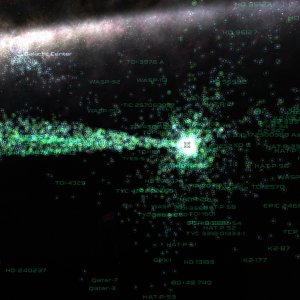
The NASA Exoplanet Archive is an astronomical exoplanet catalog and data service that collects and serves public data that support the search for and characterization of extra-solar planets (exoplanets) and their host stars. This dataset contains all planet and host star solutions, regardless of their relationship. This includes atypical systems such as free-floating planets and those with multiple stars. This table also contains Kepler, K2, and TESS candidate solutions for confirmed planet systems, a nearly complete identification of published stellar companions, and projected and true planet obliquities.
The systems in this dataset are shown with glyphs according to the number of planets in the system, and colored accordingly. When approaching a system, the glyph disappears and the actual stars and planets get loaded.
Note that this dataset also includes the stars as defined in the NASA Exoplanet Archive, so if you already have a star catalog you will end up with duplicate objects.
- Type:
system - Dataset version: v3
- Minimum Gaia Sky version: 3.7.1
- Size: 18.8MiB (19668671)
- Number of objects: 9.79k (9793)
- Creator: Toni Sagristà, tsagrista@ari.uni-heidelberg.de
- Credits:
- NASA Exoplanet Archive
- California Institute of Technology
- National Aeronautics and Space Administration
- Exoplanet Exploration Program
- Sources/links:
- Files:
UCAC2 1151977 system 🔗
Open in Gaia Sky
system-dr3-ucac2-1151977
UCAC2 1151977 is a Sirius-like binary comprising a main sequence primary with a white dwarf companion. The white dwarf is considerably hotter than the primary star.
- Type:
system - Dataset version: v1
- Minimum Gaia Sky version: 3.3.1
- Size: 4.0KiB (4100)
- Number of objects: 2 (2)
- Creator: Toni Sagristà, tsagrsita@ari.uni-heidelberg.de
- Files:
WD0141-675 system 🔗
Open in Gaia Sky
system-dr3-wd0141-675
A candidate giant exoplanet around a nearby white dwarf discovered by Gaia astrometry. The orbital period is about 33 days and the inferred planet mass is about 9 Jupiter masses. The white dwarf is located within 10 pc from the Sun.
- Type:
system - Dataset version: v2
- Minimum Gaia Sky version: 3.3.1
- Size: 4.8KiB (4867)
- Number of objects: 2 (2)
- Creator: Toni Sagristà, tsagrsita@ari.uni-heidelberg.de
- Files:
3D iso-density meshes
Dust iso-density maps (Gaia DR3) 🔗
Open in Gaia Sky
mesh-dust-dr3

mesh-dust-dr330% dust density iso-surface based on DR3 data, produced by Kevin Jardine. Dust from 'Three-dimensional extinction maps: Inverting inter-calibrated extinction catalogues' by J.R. Vergely, R. Lallement and N.L.J. Cox, 2022. Dust extinction cubes provided by Rosine Lallement.
- Type:
mesh - Dataset version: v1
- Minimum Gaia Sky version: 3.6.0
- Size: 7.7MiB (8078371)
- Number of objects: 1 (1)
- Creator: N/A
- Replaces:
- Sources/links:
- Files:
HII regions map (Gaia DR3) 🔗
Open in Gaia Sky
mesh-hii-dr3
HII regions (clouds of partially ionized gas) based on DR3 data, produced by Kevin Jardine. The HII region positions were determined by known ionizing stars and clusters with sizes estimated using Douglas Finkbeiner's H-alpha Full Sky Map and distances taken from 'Estimating Distances from Parallaxes. V. Geometric and Photogeometric Distances to 1.47 Billion Stars in Gaia Early Data Release 3' by C.A.L. Bailer-Jones et.al. 2021.
- Type:
mesh - Dataset version: v1
- Minimum Gaia Sky version: 3.6.0
- Size: 49.3MiB (51701865)
- Number of objects: 1 (1)
- Creator: Kevin Jardine, Toni Sagristà
- Replaces:
- Sources/links:
- Files:
Star density map (Gaia DR3) 🔗
Open in Gaia Sky
mesh-stardensity-dr3
35% star density iso-surfaces based on DR3 data, produced by Kevin Jardine. sosurface algorithm inspired by 'Cosmography of OB stars in the solar neighbourhood.' Astronomy & Astrophysics 584 (2015): A26 by H. Bouy and J. Alves. Hot star density and bar orientation from 'Gaia Data Release 3: Mapping the asymmetric disc of the Milky Way' by the Gaia Collaboration, R. Drimmel, et al. 2022. Data provided by Ronald Drimmel.
- Type:
mesh - Dataset version: v1
- Minimum Gaia Sky version: 3.6.0
- Size: 85.7MiB (89860887)
- Number of objects: 1 (1)
- Creator: Kevin Jardine, Toni Sagristà
- Replaces:
- Sources/links:
- Files:
Dust iso-density maps (Gaia DR2) ⚠️ 🔗
Open in Gaia Sky
mesh-dust-dr2
Dust isosurface meshes (15% and 60% density) based on Gaia DR2 by Kevin Jardine.
- Type:
mesh - Dataset version: v4
- Minimum Gaia Sky version: 3.5.0
- Size: 2.7MiB (2828309)
- Number of objects: 2 (2)
- Creator: Kevin Jardine, Toni Sagristà
- Replaced by:
- Sources/links:
- Files:
HII regions map (Gaia DR2) ⚠️ 🔗
Open in Gaia Sky
mesh-hii-dr2
HII regions (clouds of partially ionized gas) based on DR2 data, produced by Kevin Jardine.
- Type:
mesh - Dataset version: v4
- Minimum Gaia Sky version: 3.5.0
- Size: 2.4MiB (2475017)
- Number of objects: 1 (1)
- Creator: Kevin Jardine, Toni Sagristà
- Replaced by:
- Sources/links:
- Files:
Star density map (Gaia DR2) ⚠️ 🔗
Open in Gaia Sky
mesh-stardensity-dr2
Hot star iso-surface density maps based on Gaia DR2 data. Contains eight iso-density surface maps of hot stars for different preset values
- Type:
mesh - Dataset version: v3
- Minimum Gaia Sky version: 3.5.0
- Size: 159.9MiB (167662284)
- Number of objects: 8 (8)
- Creator: Kevin Jardine, Toni Sagristà
- Replaced by:
- Sources/links:
- Files:
Missions, spacecraft and satellites
Artemis I and II missions 🔗
Open in Gaia Sky
mission-artemis

mission-artemisNASA's Artemis missions attempt to bring humans to the Moon. The dataset contains Artemis I and II missions. Artemis I was the first integrated flight test of DSES: the Orion spacecraft, the SLS (Space Launch System) rocket and more. It traveled thousands of kilometers beyond the Moon in November 2022. Artemis II was the first crewed mission in the Artemis program, and was built on the success of the first Artemis. It performed a Lunar flyby on April 2026 with a crew of 4 austronauts abord the SLS rocket and Orion spacecraft.
- Type:
spacecraft - Dataset version: v1
- Minimum Gaia Sky version: 3.7.3
- Size: 28.1MiB (29433076)
- Number of objects: 6 (6)
- Creator: Toni Sagrsità - tsagrista@ari.uni-heidelberg.de
- Credits:
- State vectors (trajectory): NASA Horizons system - https://ssd.jpl.nasa.gov/horizons/
- Gaia Sky orbit conversion: Toni Sagristà
- 3D model source: NASA Eyes on the Solar System, public domain (CC-0)
- 3D model modifications: Project Artemis Celestia add-on (DaveBowman2001, andreas9343)
- 3D model adaptation for Gaia Sky and conversion to Wavefront: Toni Sagristà
- Sources/links:
- Files:
ESA Euclid 🔗
Open in Gaia Sky
spacecraft-euclid
ESA Euclid spacecraft, with its orbit and model. Euclid is an ESA mission to map the geometry of the Universe and better understand the mysterious dark matter and dark energy, which make up most of the energy budget of the cosmos. The mission will investigate the distance-redshift relationship and the evolution of cosmic structures by measuring shapes and redshifts of galaxies and clusters of galaxies out to redshifts ~2, or equivalently to a look-back time of 10 billion years. In this way, Euclid will cover the entire period over which dark energy played a significant role in accelerating the expansion of the Universe.
- Type:
spacecraft - Dataset version: v4
- Minimum Gaia Sky version: 3.7.3
- Size: 36.9MiB (38667666)
- Number of objects: 2 (2)
- Creator: Toni Sagrsità - tsagrista@ari.uni-heidelberg.de
- Credits:
- ESA’s Euclid mission
- Euclid Consortium
- Orbit data: Florian Renk, ESOC/ESA
- Gaia Sky orbit conversion: Toni Sagristà
- Sources/links:
- Files:
ESA's Gaia mission 🔗
Open in Gaia Sky
mission-gaia
ESA's Gaia mission is a global space astrometry mission that built the largest, most precise three-dimensional map of our Galaxy by surveying nearly two billion objects. Launched on 19 December 2013 and operating from the Sun–Earth L2 Lagrange point, Gaia precisely charted the positions, distances, motions, brightness, and chemical compositions of stars throughout the Milky Way and beyond. Over its operational lifetime (27 July 2014 – 15 January 2025), the spacecraft made more than three trillion observations, achieving astrometric accuracy down to 24 microarcseconds — comparable to measuring the diameter of a human hair at a distance of 1000 km. Beyond stellar cartography, Gaia discovered exoplanets, brown dwarfs, asteroids, supernovae, and quasars, while providing stringent tests of general relativity. Its legacy is an unprecedentedly rich multi-dimensional catalogue of the cosmos, processed by the Gaia Data Processing and Analysis Consortium (DPAC) and released in successive data releases.
- Type:
spacecraft - Dataset version: v1
- Minimum Gaia Sky version: 3.7.3
- Size: 3.9MiB (4101818)
- Number of objects: 6 (6)
- Creator: Toni Sagrsità - tsagrista@ari.uni-heidelberg.de
- Credits:
- Gaia Sky development team
- ESA/Gaia/DPAC
- Gaia 3D model: Toni Sagristà
- Sources/links:
- Files:
GPS Satellite Network 🔗
Open in Gaia Sky
catalog-gps
Constellation of GPS satellites with their true orbits and locations. The orbital data is pulled on-demand from Celestrak servers in TLE format and updated live. The satellites' 3D models are only an approximation for illustration purposes.
- Type:
spacecraft - Dataset version: v2
- Minimum Gaia Sky version: 3.7.3
- Size: 3.6MiB (3784250)
- Number of objects: 31 (31)
- Creator: Trevor Kjorlien, Plateau Astro
- Credits:
- GPS: USSF
- Dataset: Trevor Kjorlien, Plateau Astro
- 3D model: dh14300 at cgtrader.com, modified by Toni Sagristà
- GPS elements: Celestrak
- Sources/links:
- Files:
Hubble Space Telescope 🔗
Open in Gaia Sky
spacecraft-hst
The Hubble Space Telescope (HST) is a NASA/ESA space observatory launched on April 24, 1990, aboard Space Shuttle Discovery. It operates in low Earth orbit at an altitude of approximately 540 km with an inclination of 28.5°, completing an orbit every 96 minutes. HST features a 2.4-meter Ritchey–Chrétien reflecting mirror and a suite of scientific instruments—including Wide Field Camera 3 (WFC3), Cosmic Origins Spectrograph (COS), Advanced Camera for Surveys (ACS), and Space Telescope Imaging Spectrograph (STIS)—enabling high-resolution observations in ultraviolet, visible, and near-infrared wavelengths. Serviced by five Space Shuttle missions between 1993 and 2009, HST has contributed to breakthroughs in cosmology, galaxy evolution, exoplanet atmospheres, and solar system science. It continues to operate via NASA's Goddard Space Flight Center, transmitting data through the Tracking and Data Relay Satellite System (TDRSS).
- Type:
spacecraft - Dataset version: v3
- Minimum Gaia Sky version: N/A
- Size: 9.3MiB (9701091)
- Number of objects: 2 (2)
- Creator: Toni Sagrsità - tsagrista@ari.uni-heidelberg.de
- Credits:
- NASA/ESA
- 3D model: NASA Visualization Technology Applications And Development (VTAD)
- Sources/links:
- Files:
International Space Station 🔗
Open in Gaia Sky
spacecraft-iss
The International Space Station (ISS) on its low-Earth orbit. The ISS is a multinational modular space station operated by NASA, Roscosmos, ESA, JAXA, and CSA. Assembly began in low Earth orbit in 1998 with the launch of the Zarya module, and the station has been continuously crewed since November 2000. It orbits at an altitude of approximately 400 km with an inclination of 51.6°, completing about 15.5 orbits per day. The ISS features a pressurized volume of ~916 m³, solar arrays generating 75–120 kW of power, and multiple docking ports for crew and cargo vehicles. It serves as a microgravity laboratory for research in life sciences, physical sciences, astronomy, and technology demonstration, while also testing systems for future deep-space exploration. The station is supported by regular resupply missions and crew rotations via Soyuz, Crew Dragon, Cargo Dragon, Cygnus, and HTV spacecraft.
- Type:
spacecraft - Dataset version: v3
- Minimum Gaia Sky version: N/A
- Size: 31.9MiB (33403076)
- Number of objects: 2 (2)
- Creator: Toni Sagrsità - tsagrista@ari.uni-heidelberg.de
- Credits:
- ESA, NASA, Roscosmos, JAXA, CSA
- 3D model: NASA Visualization Technology Applications And Development (VTAD)
- Sources/links:
- Files:
James Webb Space Telescope 🔗
Open in Gaia Sky
spacecraft-jwst
The James Webb Space Telescope (JWST), with its orbit and 3D model. The James Webb Space Telescope is a NASA/ESA infrared observatory launched on December 25, 2021. It operates in a halo orbit around the Sun-Earth L2 Lagrange point and features a 6.5-meter segmented, gold-coated beryllium primary mirror paired with four scientific instruments (NIRCam, NIRSpec, MIRI, and NIRISS) to conduct near- and mid-infrared observations of the early universe, star and planetary system formation, and exoplanet atmospheres.
- Type:
spacecraft - Dataset version: v5
- Minimum Gaia Sky version: N/A
- Size: 18.0MiB (18902927)
- Number of objects: 2 (2)
- Creator: Toni Sagristà, tsagrista@ari.uni-heidelberg.de
- Credits:
- James Webb Space Telescope - NASA Science
- ESA/Webb
- Gaia Sky orbit conversion: Toni Sagristà
- Sources/links:
- Files:
Pioneer 10 and 11 missions 🔗
Open in Gaia Sky
mission-pioneer
This dataset contains the Pioneer 10 and 11 missions. The Pioneer program encompasses a series of NASA lunar and interplanetary probes launched between 1958 and 1978. Early missions (Pioneer 0–5, 1958–1960) attempted lunar orbiters and flybys, with Pioneer 4 becoming the first U.S. spacecraft to escape Earth's gravity. The interplanetary weather network (Pioneer 6–9, 1965–1969) deployed spin-stabilized probes in heliocentric orbits at 0.8–1.1 AU to study solar wind, cosmic rays, and magnetic fields. The outer Solar System missions, Pioneer 10 (launched March 2, 1972) and Pioneer 11 (launched April 5, 1973), were the first spacecraft to traverse the asteroid belt and conduct flybys of Jupiter; Pioneer 11 additionally performed the first Saturn flyby (1979). Both probes featured a 2.74-meter dish high-gain antenna, radioisotope thermoelectric generators (RTGs), and instruments including magnetometers, plasma analyzers, cosmic ray telescopes, photopolarimeters, and meteoroid detectors. Pioneer 10 ceased communications in 2003; Pioneer 11 in 1995. Both carry the Pioneer Plaque depicting human figures and Solar System location. The program concluded with the Pioneer Venus project (1978): the Orbiter (Pioneer 12) mapped Venus via radar for over a decade, while the Multiprobe (Pioneer 13) deployed one large and three small atmospheric probes to study Venusian atmospheric composition and dynamics.
- Type:
spacecraft - Dataset version: v1
- Minimum Gaia Sky version: 3.7.3
- Size: 15.9MiB (16663997)
- Number of objects: 4 (4)
- Creator: Toni Sagrsità - tsagrista@ari.uni-heidelberg.de
- Credits:
- State vectors (trajectory): NASA Horizons system - https://ssd.jpl.nasa.gov/horizons/
- Gaia Sky orbit conversion: Toni Sagristà
- 3D model source: NASA Eyes on the Solar System, public domain (CC-0)
- 3D model adaptation for Gaia Sky and conversion to Wavefront: Toni Sagristà
- Sources/links:
- Files:
Voyager 1 and 2 🔗
Open in Gaia Sky
spacecraft-voyagers
NASA's two Voyager spacecrafts, which represent the furthest man-made objects go have ever left Earth. The Voyager mission consists of twin NASA spacecraft, Voyager 1 and Voyager 2, launched in August and September 1977 to conduct a Grand Tour of the outer Solar System. Using gravity-assist trajectories, both probes studied Jupiter and Saturn; Voyager 2 continued to Uranus (1986) and Neptune (1989), remaining the only spacecraft to visit the ice giants. Each carries a 3.7-meter high-gain antenna, imaging systems, spectrometers, magnetometers, and plasma instruments, powered by radioisotope thermoelectric generators (RTGs). Both spacecraft have exited the heliosphere—Voyager 1 in 2012 and Voyager 2 in 2018—and now operate in interstellar space, continuing to transmit heliophysics and plasma data via NASA's Deep Space Network. Each probe carries the Golden Record, a curated collection of Earth sounds and images intended for any potential extraterrestrial encounter.
- Type:
spacecraft - Dataset version: v3
- Minimum Gaia Sky version: N/A
- Size: 3.5MiB (3634635)
- Number of objects: 4 (4)
- Creator: Toni Sagristà, tsagrista@ari.uni-heidelberg.de
- Sources/links:
- Files:
Virtual textures
128K Earth elevation VT (USGS) 🔗
Open in Gaia Sky
vt-earth-topography-gmted2010
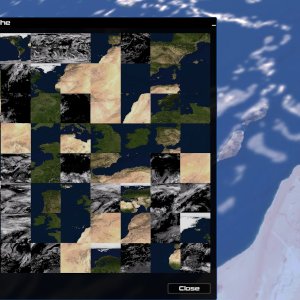
vt-earth-topography-gmted2010128K topography virtual texture for the Earth, with 7 global levels. Contains elevation data. Generated from US Geological Survey GMTED2010 dataset.
- Type:
virtualtex-pack - Dataset version: v0
- Minimum Gaia Sky version: 3.4.0
- Size: 802.6MiB (841604384)
- Number of objects: 1 (1)
- Creator: Toni Sagristà
- Sources/links:
- Files:
32K Moon topography NASA (SVS, DEM LRO:LOLA) 🔗
Open in Gaia Sky
vt-moon-topography-nasa
32K Moon topography virtual texture (NASA Scientific Visualization Studio, dataset: DEM LRO:LOLA). he displacement map (also known as a height map or elevation map) was taken directly from the latest (as of spring 2019) gridded data products of the Lunar Orbiter Laser Altimeter instrument team. LOLA data is archived on the Geosciences Node of the Planetary Data System. A small subset of the LOLA data stored there, the global cylindrical projections at 4, 16, and 64 pixels per degree, has been reformatted here as uncompressed TIFF files, in vertical units of either floating-point kilometers or 16-bit unsigned integer half-meters.
The reference surface for all LRO data is a sphere of radius 1737.4 km. LOLA's gridded elevation data is published as signed 16-bit integers in units of half-meters relative to this radius. For the floating-point TIFFs, the source data was divided by 2000. For the unsigned 16-bit TIFFs, the source data was offset by +20,000 (10 km) so that all of the values are positive. This latter format is provided for software that doesn't work well with either floating-point or signed integer files. Credits: Ernie Wright (USRA), Noah Petro (NASA/GSFC).
- Type:
virtualtex-pack - Dataset version: v1
- Minimum Gaia Sky version: 3.4.0
- Size: 46.1MiB (48323624)
- Number of objects: 1 (1)
- Creator: Toni Sagristà
- Sources/links:
- Files:
64K Earth cloud VT (NASA) 🔗
Open in Gaia Sky
vt-earth-clouds-nasa
64K Earth cloud map as a virtual texture pack. Data from NASA's visible Earth protal, 'Blue Marble: Clouds' dataset.
- Type:
virtualtex-pack - Dataset version: v0
- Minimum Gaia Sky version: 3.4.0
- Size: 399.9MiB (419326290)
- Number of objects: 1 (1)
- Creator: Toni Sagristà
- Sources/links:
- Files:
64K Mars difuse VT (Celestia) 🔗
Open in Gaia Sky
vt-mars-diffuse-vanvliet
64K Mars surface virtual texture pack. From Celestia moderlothe, made by John Van Vliet.
- Type:
virtualtex-pack - Dataset version: v0
- Minimum Gaia Sky version: 3.4.0
- Size: 1.2GiB (1340083517)
- Number of objects: 1 (1)
- Creator: Toni Sagristà
- Sources/links:
- Files:
64K Mars elevation VT (MOLA/USGS) 🔗
Open in Gaia Sky
vt-mars-topography-mola
64K Mars topography virtual texture, with 6 global levels. Contains elevation data. Generated from USGS Mars Orbiter Laser Altimeter (MOLA), an instrument on the Mars Global Surveyor (MSG).
- Type:
virtualtex-pack - Dataset version: v0
- Minimum Gaia Sky version: 3.4.0
- Size: 93.5MiB (98024559)
- Number of objects: 1 (1)
- Creator: Toni Sagristà
- Sources/links:
- Files:
64K Moon difuse VT (Celestia) 🔗
Open in Gaia Sky
vt-moon-diffuse-vanvliet
64K surface virtual texture pack for the Moon (LRO WAC). From Celestia moderlothe, made by John Van Vliet.
- Type:
virtualtex-pack - Dataset version: v0
- Minimum Gaia Sky version: 3.4.0
- Size: 2.7GiB (2938286856)
- Number of objects: 1 (1)
- Creator: Toni Sagristà
- Sources/links:
- Files:
8K Moon topography VT (LRO WAC DTM) 🔗
Open in Gaia Sky
vt-moon-topography-lro
8K Moon topography virtual texture (LRO WAC DTM). The WAC Digital Terrain Model was derived from WAC observations, and covers 98.2% of the lunar surface. Using digital photogrammetric techniques, the GLD100 was computed from 69,000 WAC stereo models. Due to persistent shadows near the poles it is not possible to create a complete WAC stereo map at the very highest latitudes.
- Type:
virtualtex-pack - Dataset version: v0
- Minimum Gaia Sky version: 3.4.0
- Size: 8.4MiB (8802327)
- Number of objects: 1 (1)
- Creator: Toni Sagristà
- Sources/links:
- Files:
Earth surface VT (Sentinel-2, Blue Marble) 🔗
Open in Gaia Sky
vt-earth-diffuse-sentinel
Ultra high-resolution (down to 10 m/px) virtual texture for 31 selected urban areas, and 128K elsewhere. Levels 0-5 extracted from NASA's Blue Marble July 86K image. Level 6 and below are processed from Sentinel-2 data. Includes the following urban areas down to 10-20 m/px resolution: Heidelberg, Barcelona, Montreal, New York, Paris, Rome, Berlin, Edinburgh, London, Madrid, Prague, Lisbon, Chicago, San Francisco, Los Angeles, New Delhi, Beijing, Tokyo, Ankara, Budapest, Amsterdam, Cape Town, Kathmandu, Vienna, Bratislava, Mumbai, Cairo, Istanbul, Copenhagen, Cape Canaveral, Shanghai, Sao Paulo, Mexico City, Tehran, Buenos Aires, Rio de Janeiro, Lagos, Bogota, Lima, Hong Kong, Bangkok, and Andorra la Vella.
- Type:
virtualtex-pack - Dataset version: v0
- Minimum Gaia Sky version: 3.6.8
- Size: 3.4GiB (3696717048)
- Number of objects: 1 (1)
- Creator: Toni Sagristà, tsagrista@ari.uni-heidelberg.de
- Credits:
- Contains modified Copernicus Sentinel-2 data 2023-2025, processed by tsagrista
- Reto Stöckli, NASA Earth Observatory
- Replaces:
- Sources/links:
- Files:
128K Earth surface VT (NASA) ⚠️ 🔗
Open in Gaia Sky
vt-earth-diffuse-nasa
128K Surface virtual texture for the Earth, with 7 global levels and 4 more on the UK. Levels 0-6 extracted from NASA's visible Earth portal, levels 7-10 from Jestr's Celestia dataset.
- Type:
virtualtex-pack - Dataset version: v0
- Minimum Gaia Sky version: 3.4.0
- Size: 1.3GiB (1427321218)
- Number of objects: 1 (1)
- Creator: Toni Sagristà
- Replaced by:
- Sources/links:
- Files:
Volumetric objects and effects
Saturn rings 🔗
Open in Gaia Sky
saturn-rings
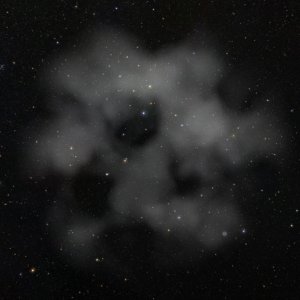
saturn-ringsThe rings of Saturn as a cloud of 1.5 million rock and dust particles. The dataset has been generated with a custom script that uses the ring profile to approximate the radial density, and uses physically-grounded orbital elements for each particle.
- Type:
volume - Dataset version: v1
- Minimum Gaia Sky version: 3.7.2
- Size: 139.7MiB (146508089)
- Number of objects: 1.5M (1500000)
- Creator: Toni Sagristà, tsagrista@ari.uni-heidelberg.de
- Sources/links:
- Files:
Volumetric Aurora 🔗
Open in Gaia Sky
volumetric-aurora

A volumetric aurora borealis and australis for the Earth. This is based on the paper by Lawlor et al. The aurora is rendered using a ray-marching algorithm, producing a volumetric object.
- Type:
volume - Dataset version: v2
- Minimum Gaia Sky version: 3.6.5
- Size: 183.9KiB (188285)
- Number of objects: 1 (1)
- Creator: Toni Sagristà
- Sources/links:
- Files: